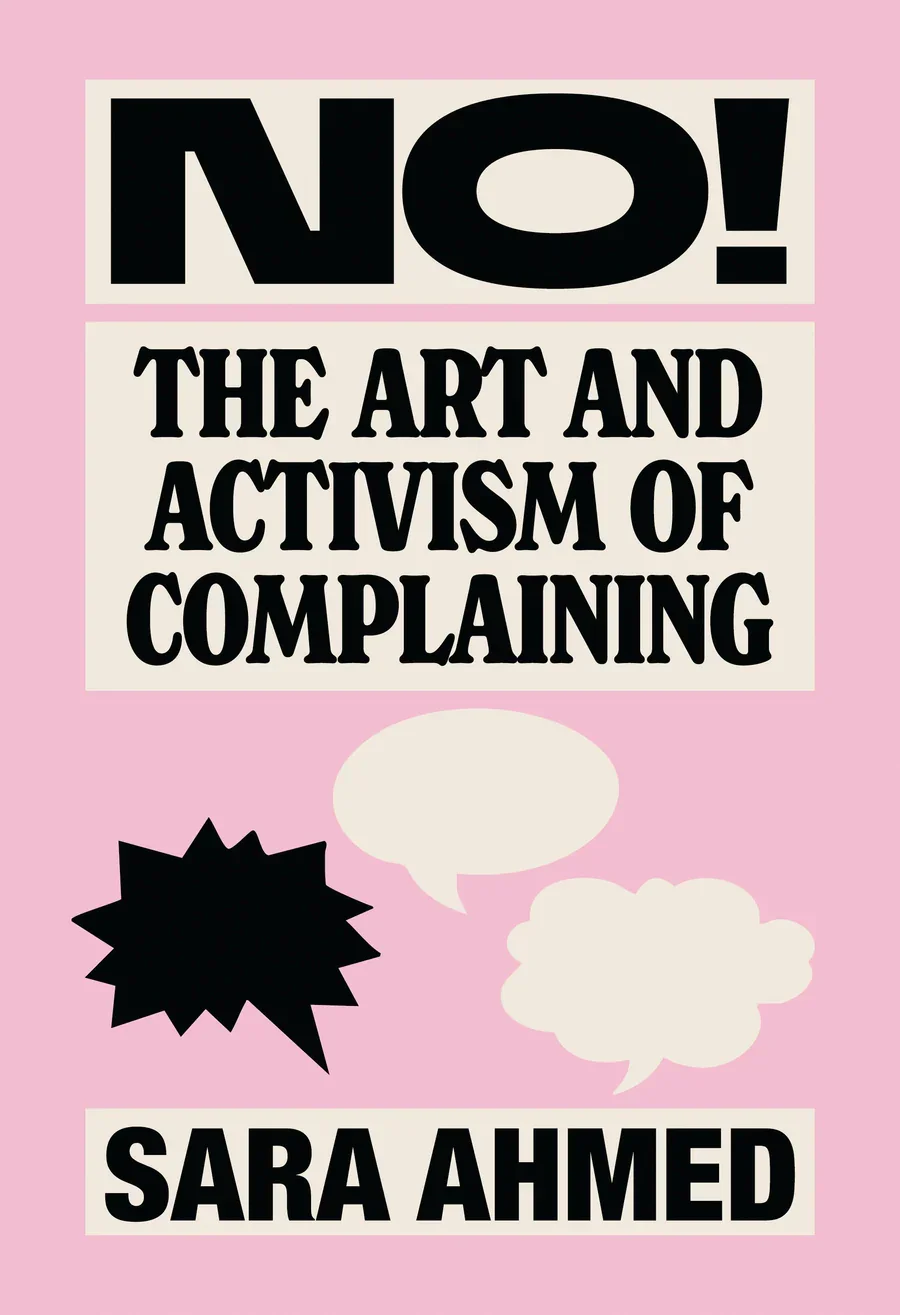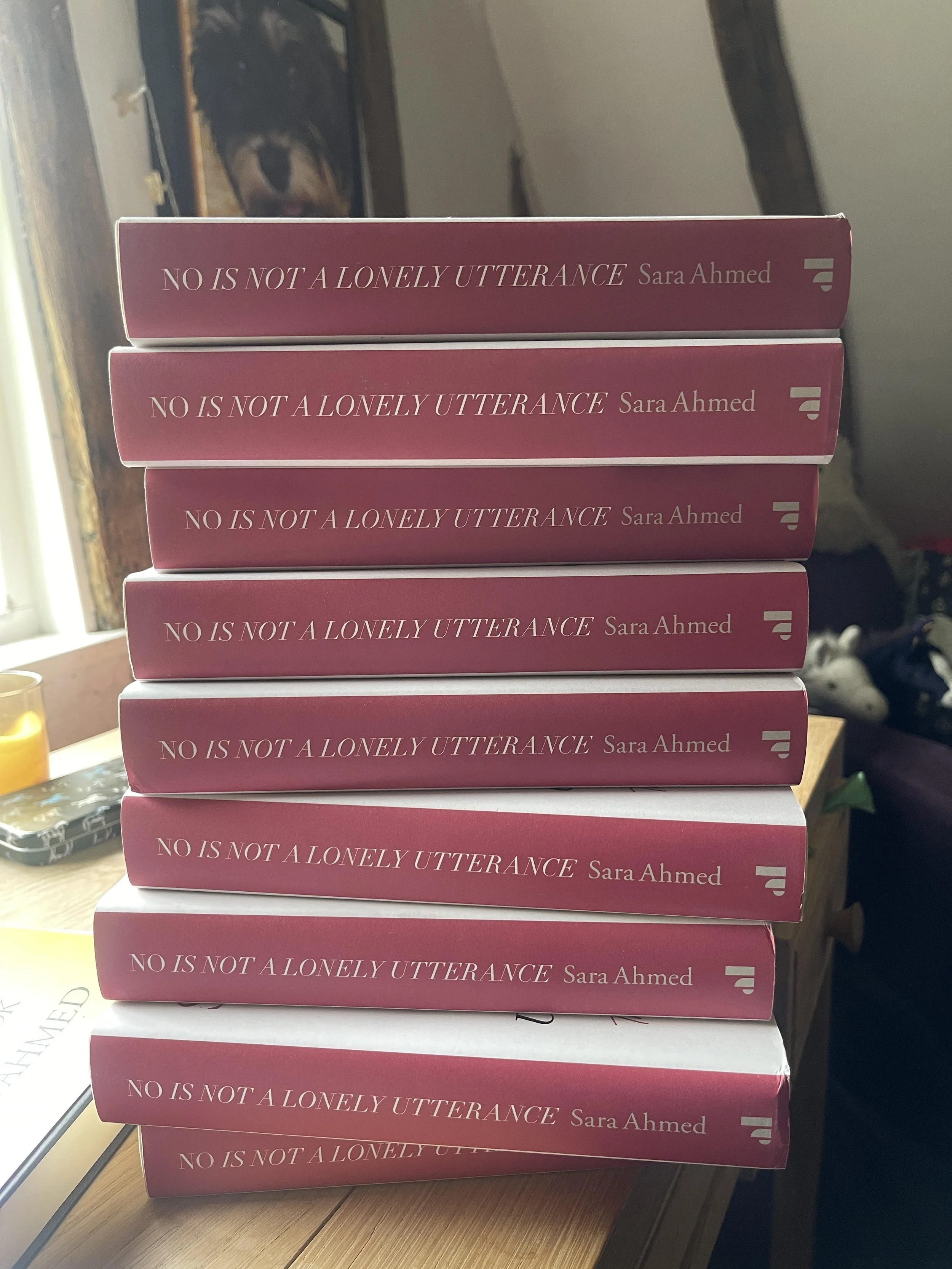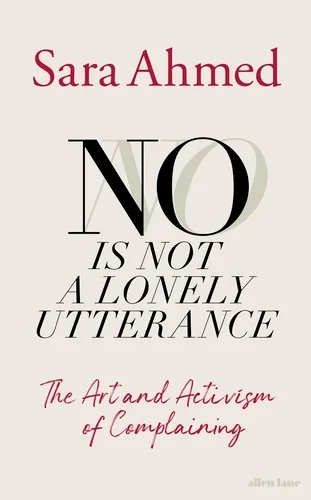
No is Not a Lonely Utterance, Launch of Paperback, Pages of Hackney, London
Please join us for the launch of the paperback edition! I will be in conversation with Janine Francois. Tickets available here.
Your Custom Text Here
Please join us for the launch of the paperback edition! I will be in conversation with Janine Francois. Tickets available here.
In her political history of common sense, Sophia Rosenfeld notes that ‘common sense generally only comes out of the shadows and draws attention to itself at moments of perceived crisis’. To become ‘the other’ of common sense is to be perceived as the cause of a crisis. Common sense has been defined against many others, from idealists to sceptics and the overly enthusiastic. Those who threaten common sense by questioning certainties of sex and race are now called ‘woke’. And so, when common sense comes out of the shadows, it tends to bring its others with it.
Can we retell the story of common sense from the point of view of its others? In this lecture, Sara Ahmed – one of our most vital political thinkers and the 2026 Hope Street Writer in Residence at the University of Liverpool – considers journeys undertaken in the mid-twentieth century by two scholars known for their contributions to rethinking common sense: the analytical philosopher G. E. Moore and the sociologist Harold Garfinkel. Ahmed will show how others appear in the shadows of their work, giving us another angle on common sense itself.
Tickets available here.
Sara Ahmed will be in conversation with Soraya Chemaly, an award-winning writer and activist whose work focuses on the role of gender in culture, politics, religion, and media.
Event is free and no tickets are required. Further information is here.
Sara Ahmed will be in conversation with Heather Love about the collective work of trying to change institutions within an increasingly hostile environment and the importance of creativity and hope in sustaining these efforts.
Further details available here.
Please join us for the launch of Sara Ahmed’s new book, 'No! The Art and Activism of Complaining,' published by Feminist Press. Sara will be joined by Roxane Gay for their first ever public conversation.
Event is free but registration is required.
Harvard Book Store welcomes Sara Ahmed for a discussion of her new book, No!: The Art and Activism of Complaining. She will be joined in conversation by Durba Mitra—award-winning author of Indian Sex Life and The Future That Was.
Event is free: no ticket required. Further information here.
In this lecture, Sara will reflect back on her experience of writing No is Not a Lonely Utterance: The Art and Activism of Complaining. Although this book was written at a time of escalating and devastating violence, it is, perhaps curiously, a hopeful book. She will share some thoughts on hopefulness and how it came into the work from the act of bringing so many complaints, made at different times and in different places, together. The short lecture will be followed by a conversation with Adrija Dey.
In person registration here.
The event is part of the Transforming Theory, Policy, and Practice: Decolonise Sexual and Gender-Based Violence (SGBV) in Higher Education organised by FemIDEAS and FemDialogue. For online resgistration and further details available here.
Further information about, and tickets for, this online event are available here.
In this teach in, we explore how complaining can be a form of feminist art and activism. It begins with the figure of “sister killjoy” introduced by Ama Ata Aidoo, as well as the feminist killjoy, exploring how some of us are heard as complaining, as being negative, because we point to problems, refusing to pass over institutional violence in return for happiness, inclusion or promotion. But saying no to institutions, or to those given power by them, often leads to doors being shut, to voices being silenced, and complaints buried. We have to find ways not just to say no to institutions, but to get our nos out of them. Saying no can lead us to others who said no, giving much needed solace and solidarity in the face of escalating violence.
You can sign up here.
Reading list is here.
Information and tickets available here
Online keynote for Society for Phenomenology and Existential Philosophy 2025 meeting.
Details here.
Time 11am EDT 7pm GMT.
Further information and tickets here.
Part of the No is Not Lonely Utterance book tour.
Organised by Juno Books.
Further information and tickets available here.
“Behind many disasters are unheard complaints.”
Further information and tickets here.
Part of the No is Not a Lonely Utterance book tour.
Information and tickets available here.
Part of the No is Not a Lonely Utterance book tour
Join us to celebrate the launch of two books exploring institutional change through feminist strategies of complaint, listening, and sector transformation. Sarah Durcan will speak on WTF HAPPENED: #WakingTheFeminists and the Movement that Changed Irish Theatre, followed by a lecture from Sara Ahmed on No is Not a Lonely Utterance: The Art and Activism of Complaining. Ahmed will examine the anatomy of a complaint, drawing on diverse testimonies to show how complaint can foster collective action and better working environments.
Part of the No is Not a Lonely Utterance book tour.
Tickets available here.
This event is part of the No is Not a Lonely Utterance book tour. There will be a public reading, and short discussions with Dr Nita Mishra (UL) and Dr Carol Ballantine (UL), as well as signings.
Tickets available here.
Further information and tickets here.
Part of the No is Not a Lonely Utterance book tour.
Conversation with Noreen Masud.
Part of the No is not a Lonely Utterance book tour.
Information and tickets here:
Part of the No is Not a Lonely Utterance book tour.
Further Information and tickets available here.
Part of the No is Not a Lonely Utterance book tour.
Information about the event here.
Tickets available here
Come along and say no to help launch Sara’s new book, No is Not a Lonely Utterance: The Art and Activism of Complaining. Institutions make it hard to say no in them or to them as is evidenced by their increasing use of force against those who are protesting the genocide in Gaza. However hard it is made to say no, saying it can be how we find others who say it. No can be how we share our refusal to accept a situation, clarify our projects, and find our people.
In the book, Sara reflects on her experience of supporting a complaint about sexual harassment made by a student-led collective before she turns to share stories of complaint from different workplaces. For this event, she is pleased to be joined by members of that collective including Heidi Hasbrouck, Tiffany Page and Leila Whitley, as well as Akanksha Mehta, co-director of The Centre for Feminist Research at Goldsmiths, who will participate virtually.
Please note that this event will be masked. There will be some masks available at the Library, but bring your own if you have/prefer them!
There is an option to join us online - please email events@feministlibrary.co.uk to let us know you would like to receive a joining link.
Please note the event will involve discussion of institutional violence, bullying, harassment and hostile environments.
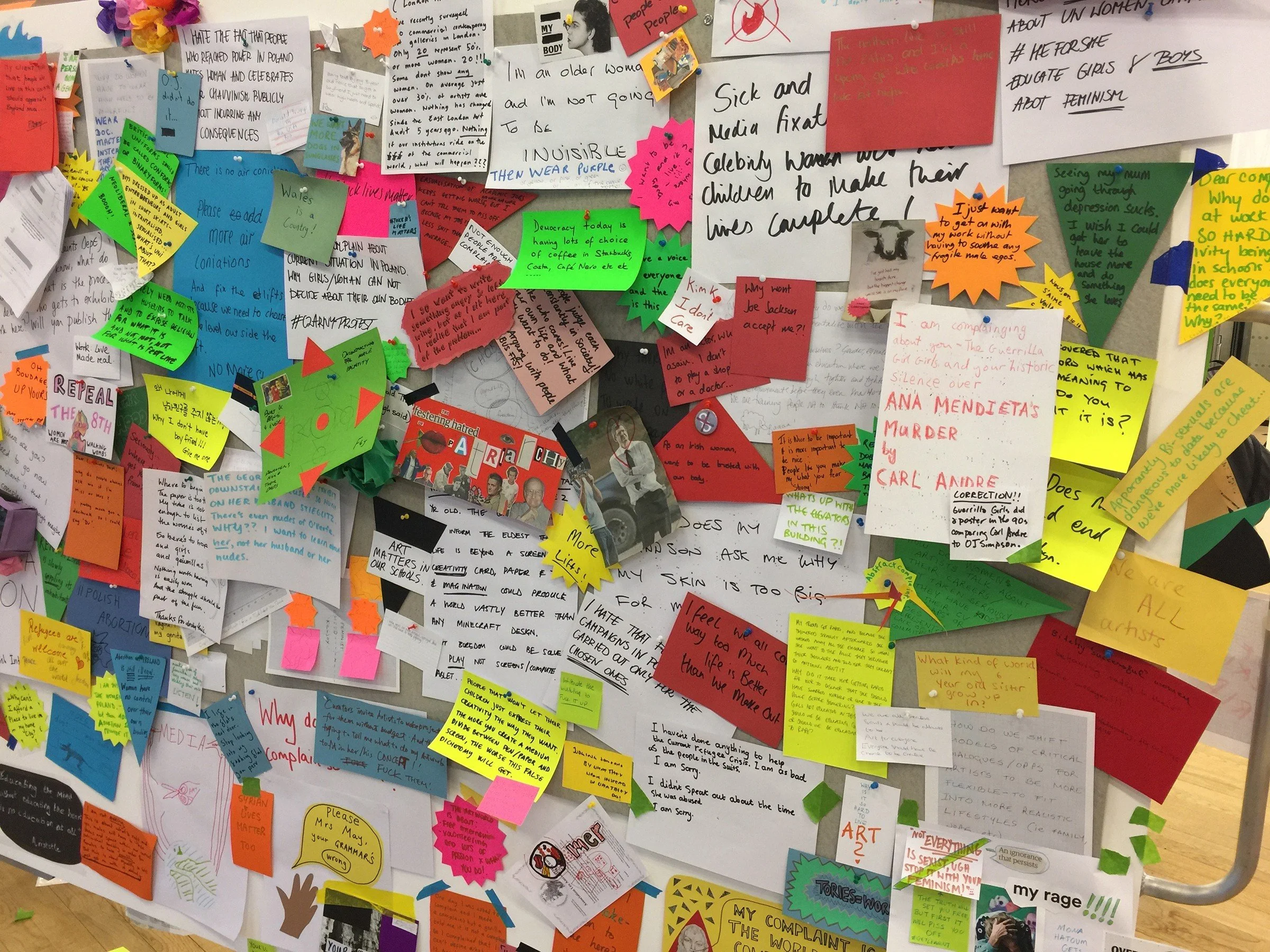
(picture credit: Guerilla Girls)
Tickets available here.
This is the opening event for the No is Not a Lonely Utterance book tour.
“Join us at Round Table Books for the launch of feminist killjoy and scholar extraordinaire, Sara Ahmed's new book, No is Not a Lonely Utterance, The Art and Activism of Complaining on Thursday, 18th of September.
Sara is a truly intersectional feminist who speaks to the feminist niggle in all of us, and this book is no different. We all know that to complain is an intimate, dangerous act - whether it’s speaking up about racism in the workplace or taking a stand against sexual harassment at university, the act of complaining to an institution can leave you isolated and undermined, all while the original injustice remains unresolved.
In this incredibly accessible, affirming book, Sara Ahmed dissects the anatomy of a complaint, revealing how institutions create hostile environments that stigmatize complainers, and charts a way we can listen to grievances with ‘feminist ears’ and create a better environment for our life's work. This book has spoken to us in so many ways, and we are very excited to share it with you, and celebrate Sara's latest work.
Join us to hear from Sara herself, and for an evening of community discussion. Books will be available to buy on the day, and Sara will be signing copies!”
Tickets are FREE and available HERE, but limited in number. As we have restricted spaces, please 'return' your ticket if you are no longer able to make it.
A complaint is how we say no, how we refuse to acquiesce to a situation. We might say no to a harasser and to the institution that enables harassment. But saying no within an institution, or to one, is no simple matter. It often leads to being shut out or shut down. In this lecture, I explore how no is a small word with a lot of work to do; or how we have a lot of work to do to keep it going. Even when a no shuts a door, that no can be passed down and picked up by others. A no can be how we clarify our projects and find our people. I will be drawing on my forthcoming book, No is Not a Lonely Utterance: The Art and Activism of Complaining.
Register here for the in person event:
Register here for the online event:
Further details coming soon!
https://www.sabanciuniv.edu/tr/events/detail/27804
Lecture description:
In this lecture I will reflect on what I have learnt from how the figure of the feminist killjoy has been translated into different languages. I will return to some of my earlier considerations on the ethics of translation in Strange Encounters (2000) and also connect ‘killjoy translations’ to my recent concern with how ‘no’ is a sociable utterance. I will explore how activism might require the perpetual act of translating our refusals of gendered, institutional, state and colonial violence.
Event description:
With this one-day event, we aim to explore and reframe the horizons, challenges, and possibilities of transfeminist queer translation in its interconnection with theories of affect and decoloniality. The conference’s idea was born out of reflections stemming from the translations into Italian of the work of leading feminist writer and independent scholar Sara Ahmed, who will act as a keynote speaker at the event, and of other recent translations into Italian of feminist and queer thinkers and writers. It also stems from a special issue on affect and queer feminist translation that Michela and Samuele are co-editing for the journal Italian Culture.
Further details here: https://www.queerfeministtranslation.uk/
In her talk, Dr. Ahmed explores how diversity is increasingly framed as forced change, an ideological imposition, or as compelled speech. Given these attacks on diversity and equality initiatives, it might seem that it is time to abandon critiques of what diversity is not doing. The aim of Dr. Ahmed’s lecture is to show how these critiques provide the tools to explain and challenge what is going on.
Dr. Ahmed will draw on two projects: the first on complaint; the second on common sense. For the former, she uses research from her newest book A Complainer’s Handbook: A Guide to Building Less Hostile Institutions for an understanding of institutional power and institutional change. She will also draw on a new project on common sense. Common sense is increasingly appealed to as a legacy, an alternative to “wokeism,” and as an argument against institutional change.
Further information and registration: https://events.ok.ubc.ca/event/changing-institutions-common-sense-complaint-and-other-lessons-in-legacy/
Time zone: 9am PST and 5pm GMT.
In this lecture I will share some reflections on why the feminist killjoy has become a central figure in my writing, philosophy and activism. Drawing on Living a Feminist Life and The Feminist Killjoy Handbook, which have both been recently translated into Polish, I will explain why I think of killing joy as a task more than an identity. To be a killjoy at work is to work on institutions as well as at them, to be willing to complain about institutional problems even if that means becoming the problem. To be killjoys at work is also to show how institutions often resist being changed by appearing to be committed to it. I will offer some observations on the creativity and collectivity of killing joy drawing on my recently completed, A Complainer’s Handbook: A Guide To Building Less Hostile Institutions.
https://artmuseum.pl/en/events/killjoys-at-work-lecture-by-sara-ahmed
Time is Eastern Time (4pm GMT).
In my book, On Being Included: Racism and Diversity in Institutional Life, published over a decade ago, I explored how diversity is used by institutions as a way of appearing to doing something. The appearance of change can be a form of resistance to change. And yet, diversity is increasingly framed as forced change, an ideological imposition, or as compelled speech. Given these attacks on diversity and equality initiatives, it might seem that it is time to abandon our critiques of what diversity is not doing. One of my aims in this lecture is to show how these critiques give us the tools to explain and challenge what is going on. I will draw on two projects: the first on complaint; the second on common sense. For the former, I spoke to academics and students who had made or considered making complaints about abuses of power and inequalities within universities. I am now working on a new book A Complainer’s Handbook: A Guide to Building Less Hostile Institutions (a companion text to The Feminist Killjoy Handbook) in which I pull out the significance of this research for an understanding of institutional change. I will also draw on a new project on common sense. Common sense is increasingly appealed to as a legacy, an alternative to “wokeism,” and as an argument against institutional change.
Register here
https://zoom.us/meeting/register/tJYldu2hrjguH9N-c4TyOf8H7_UI3d5voMCu
Information and registration here:
https://www.thephilosopher1923.org/events/on-feminist-killjoys
https://cajanegraeditora.com.ar/acciones/sara-ahmed-en-conversacion-con-carmen-romero-bachiller/